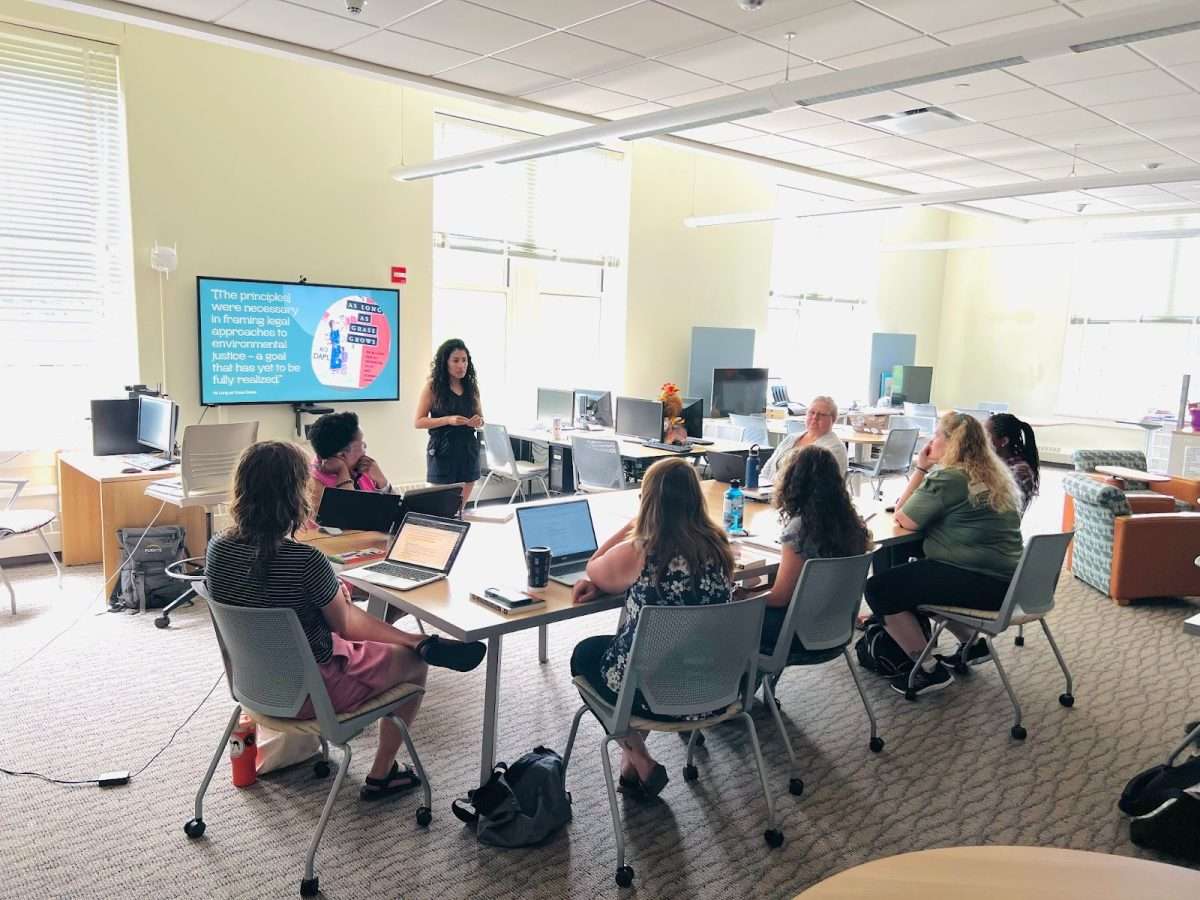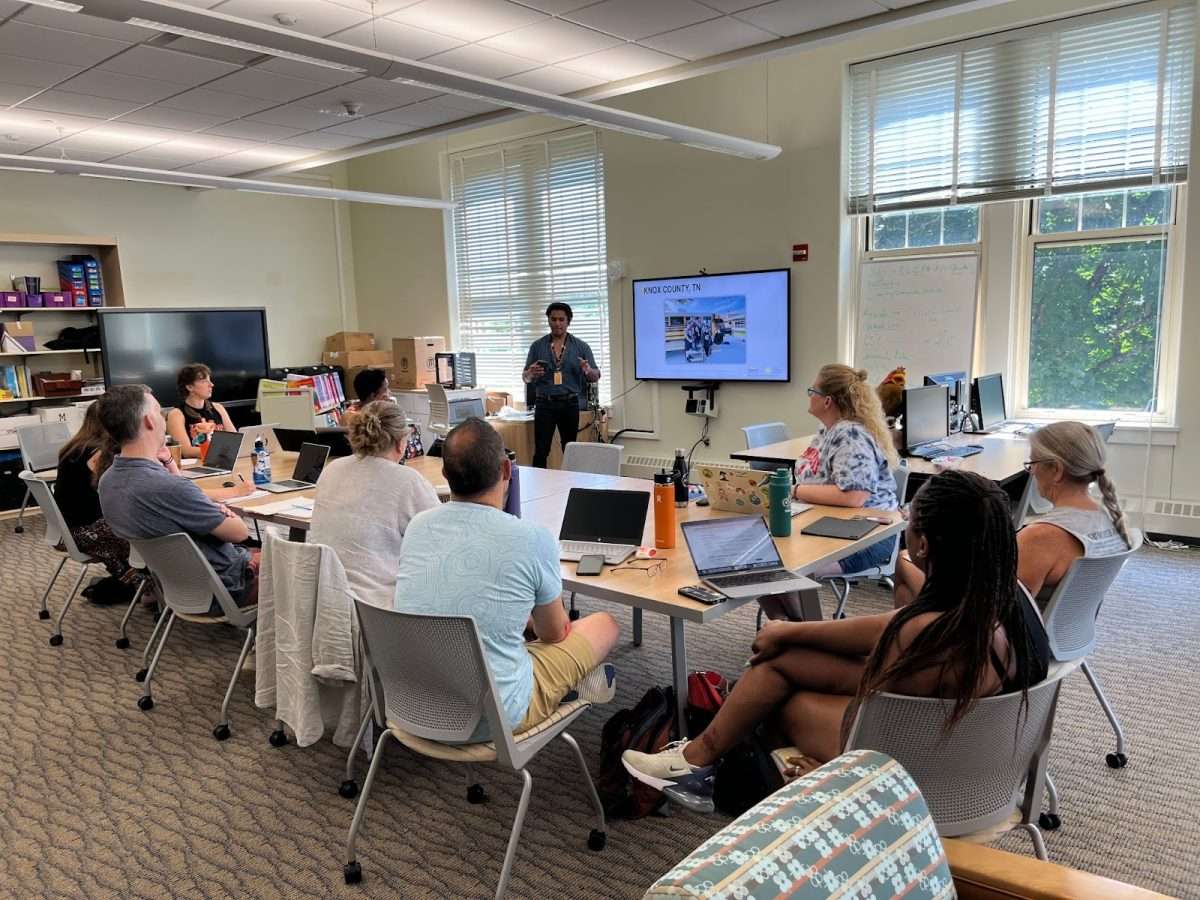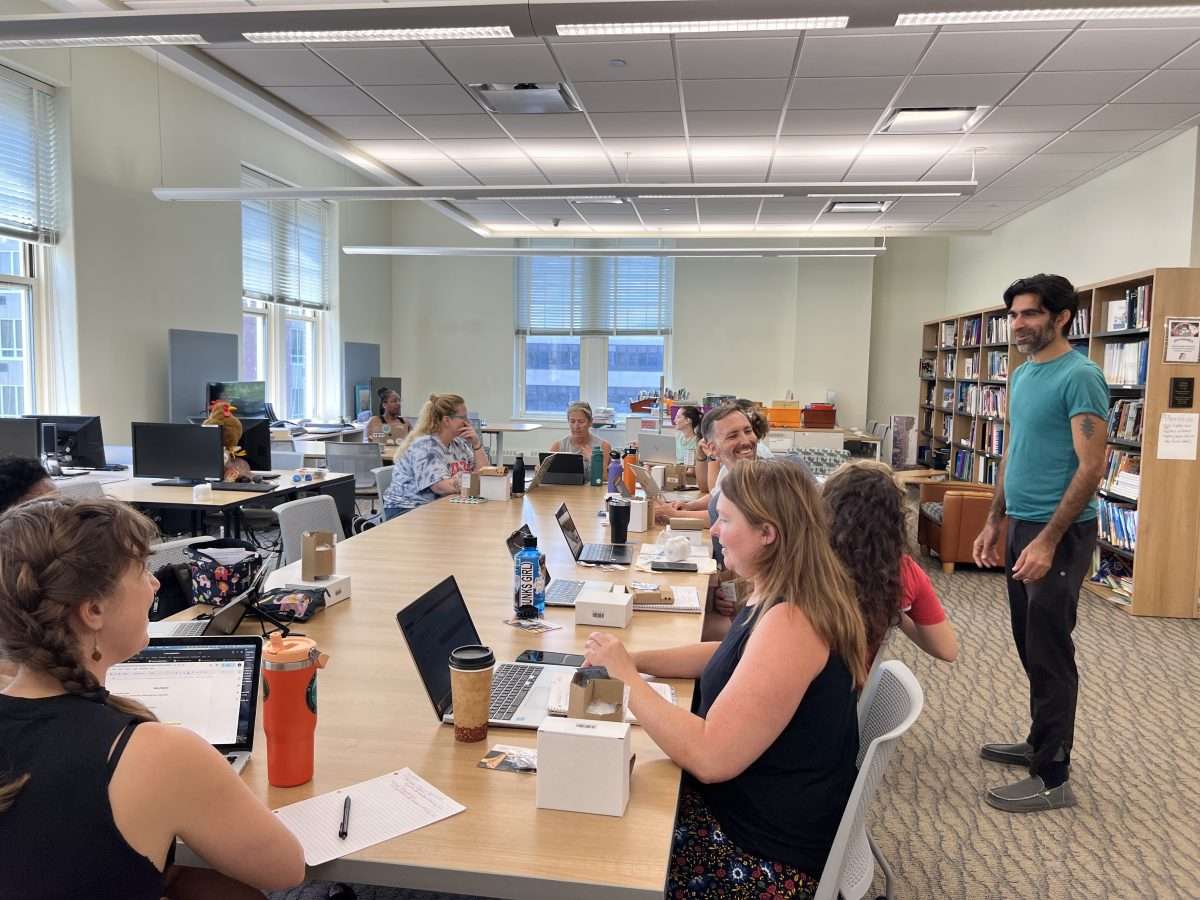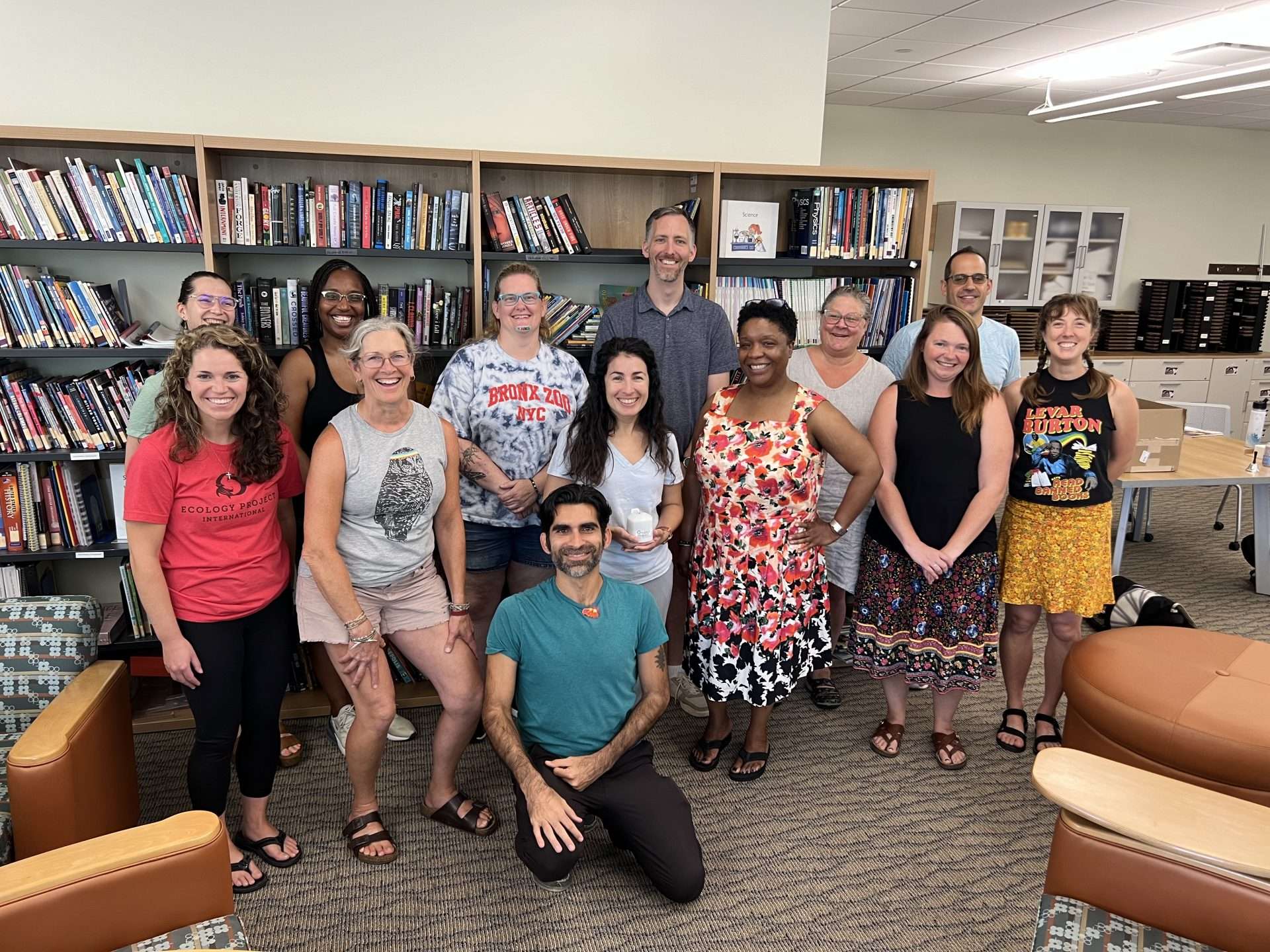
During the summer of 2024, we put out a call for teachers to join a three-day “Environmental Justice and Decarbonization Summer Institute.” In collaboration with the World Resources Institute’s (WRI) Electric School Bus Initiative, we hosted eleven Mid-Hudson Valley teachers at the workshop. The teachers spanned ten school districts, subjects and grade levels covering everything from high school chemistry to first grade fundamentals.
The program, led by Samrat Pathania and Laura Diaz (co-founders of ECEJ), provided intensive summer professional development to support teachers bringing lessons on electrification into their classrooms and created a community for them to implement their lesson plans during the 2024-25 school year.
The three-day training gave educators a deep-dive into the core principles of environmental justice.
Environmental Justice Principles
The first day covered Environmental Justice Principles, the Jemez Principles, and the history of the EPA. They also learned how environmental justice intersected with student health and were asked to explore some data sets from the World Resources Institute. They were then asked to apply an environmental justice principle to their curriculum.
Decarbonization through Beneficial Electrification
On the second day, the teachers dove into decarbonization through beneficial electrification. In this section educators got an understanding of how the transportation sector contributes to both air pollution and to GHG emissions. They then looked into the benefits of electrification through the lens of electric vehicles and explored WRI’s Electric School Bus Initiative with an eye to their district’s specific transportation challenges/opportunities.
Decarbinization Lesson Plans
The final day of the cohort brought these concepts together and provided teachers with some time to start crafting their environmental justice and decarbonization lesson plans for the next year. The cohort met virtually throughout the year and communicated via Zoom, text, and email to continue asking questions about their developing curriculum and building a community. Teachers appreciated the ability to continue meeting and learning throughout the year. Some even expressed an interest in having more in-person meetings with local teachers.
Participants received stipends both for the institute itself and for each of the cohort sessions they attended during the school year. These stipends both enabled them to participate in the program with everything else on their plates and demonstrated the value of their time.
Environmental Justice, Decarbonization, and Biodiversity Spring Conference
At the end of the year, ECEJ co-hosted the 2nd Annual Spring Conference Centering Environmental Justice, Decarbonization, and Biodiversity at SUNY New Paltz in collaboration with the Mid-Hudson Teacher Center and the New York Master Teacher Program. Five educators from the summer institute shared what they learned as part of the cohort and how they brought these lessons into their respective classroom communities. The conference was attended by K-12 educators in the Hudson valley including many Master Teachers.
Kristy Zukswert gave a presentation focused on helping students to understand air pollution, where it comes from, how it impacts their health, and what their spheres of influence are over it. The presentation also covered GHG emissions and some chemistry questions around how they relate to vehicle use.
Alicia Redway put students in the driver’s seat and asked them to “unmask the invisible enemy”–air pollution. To unmask the enemy, they followed the 5E framework: engage, explore, explain, elaborate, and evaluate. They gathered raw data through footage, interviews, air monitors, and observation logs. The students then made sense of these findings through narrative scripts for short documentaries that included on-screen graphics and voice overs. They finally extended their knowledge by connecting their findings to policy, ethics, and social justice issues.
Other teachers worked on everything from collecting data around campus with their purple air monitors to creating an assignment for students to explore the feasibility of electric school buses being implemented in their district as part of an energy resources unit in an elective senior environmental class.
Participant Feedback
Overall teachers found the training, the support sessions, and the symposium useful and energizing for their professional development.
We believe part of the key to that success is the teacher-leader model that we employed. The model put teachers in the driver’s seat by giving them the time, information, and sustained support they needed to develop relevant content for their students. In the end, the program not only created strong curricula, but also sparked more long-term engagement with the content.
While reflecting on the experience, one teacher shared that “[t]hese issues are difficult because they are so personal and so impactful to the lives and health of our students and communities… it is easy to feel overwhelmed, but with this group of like minded educators we have harnessed our collective strength and energy – bringing a hope and solutions based approach to our classrooms. This educator community has proven the strength of collaboration. We each look forward to building our school communities and working towards a more just future.”
Overall the survey responses from teachers showed us that teachers largely wanted more: more time to do research, more in-person gatherings, and more cohorts in the future.